
Portland Cement Type V Low Alkaline
Portland Cement Type V Low Alkaline (ASTM C150)
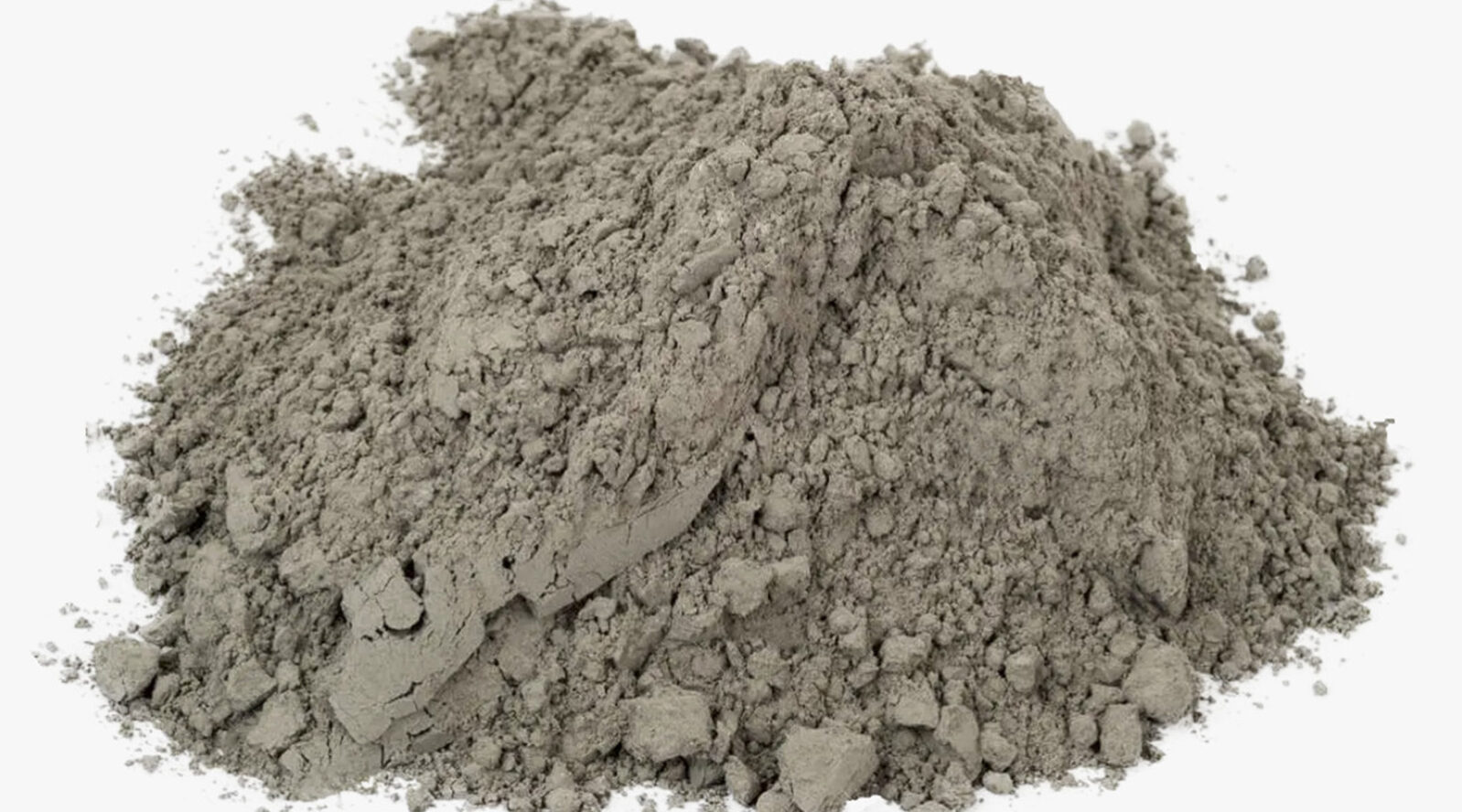
| Product Name | Portland Cement Type V Low Alkaline(ASTM C150) |
| Description | It is a cement type with high sulfate resistance, with a tri-calcium aluminate (C3A) value of maximum 5%, which meets the requirements of ASTM C150 and AASHTO M 85. Standards, obtained by grinding the specially produced sulfate-resistant Portland Cement clinker with set-regulating gypsum. Since it meets ASTM C150 Low Alkaline requirements, it is also resistant to alkali-aggregate reaction in concrete. |
| Usage Areas | It is suitable for use in applications where concrete will be exposed to soil with high alkaline content or water with high sulfate content. It can be used in constructions such as drainage structures, sewers, bridges and pavements, which can be exposed to high rates of sulfate attacks from groundwater. In addition, it can be used in mass concrete applications where low hydration heat is required and in concrete casting applications that settle into the mold. |
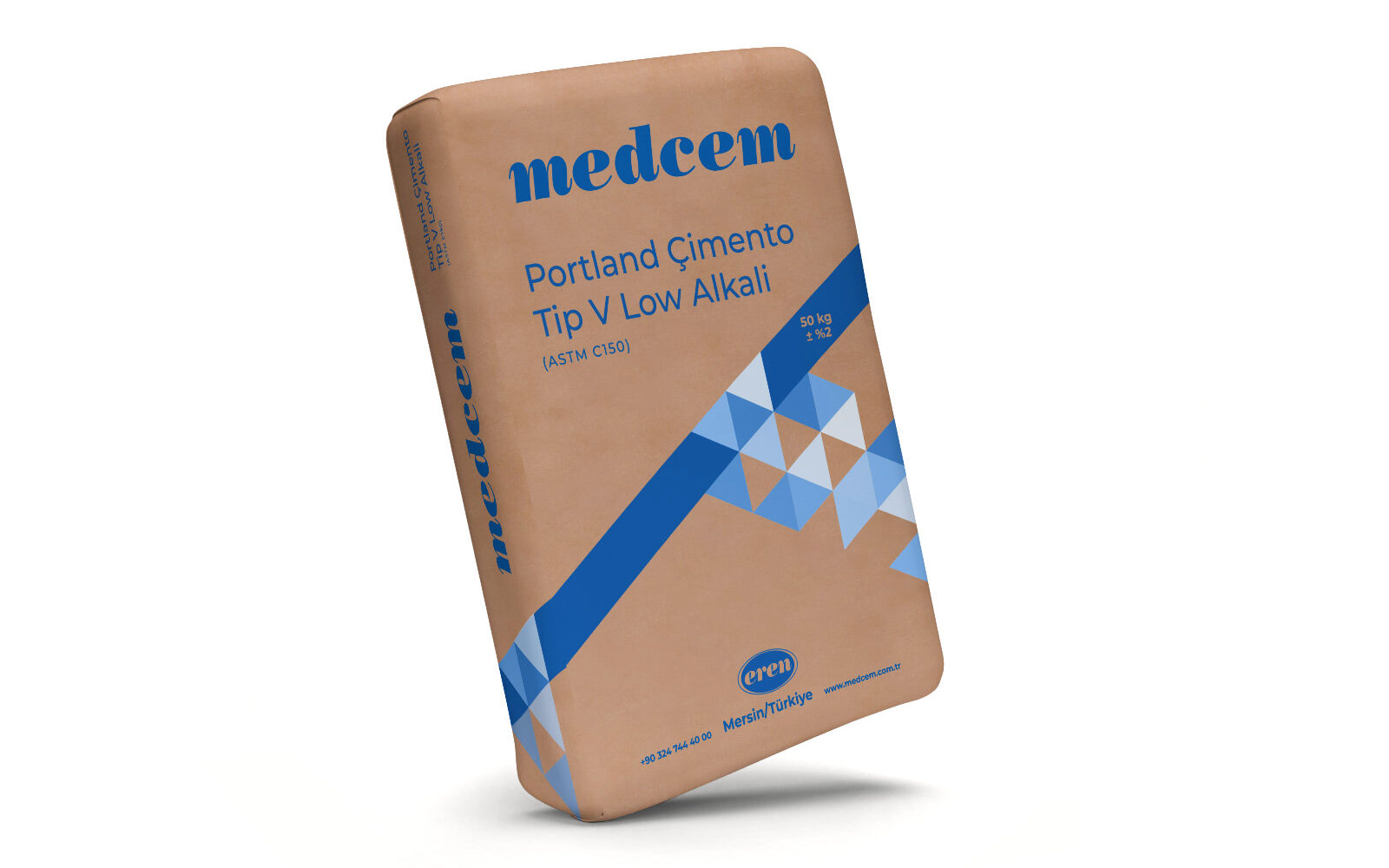
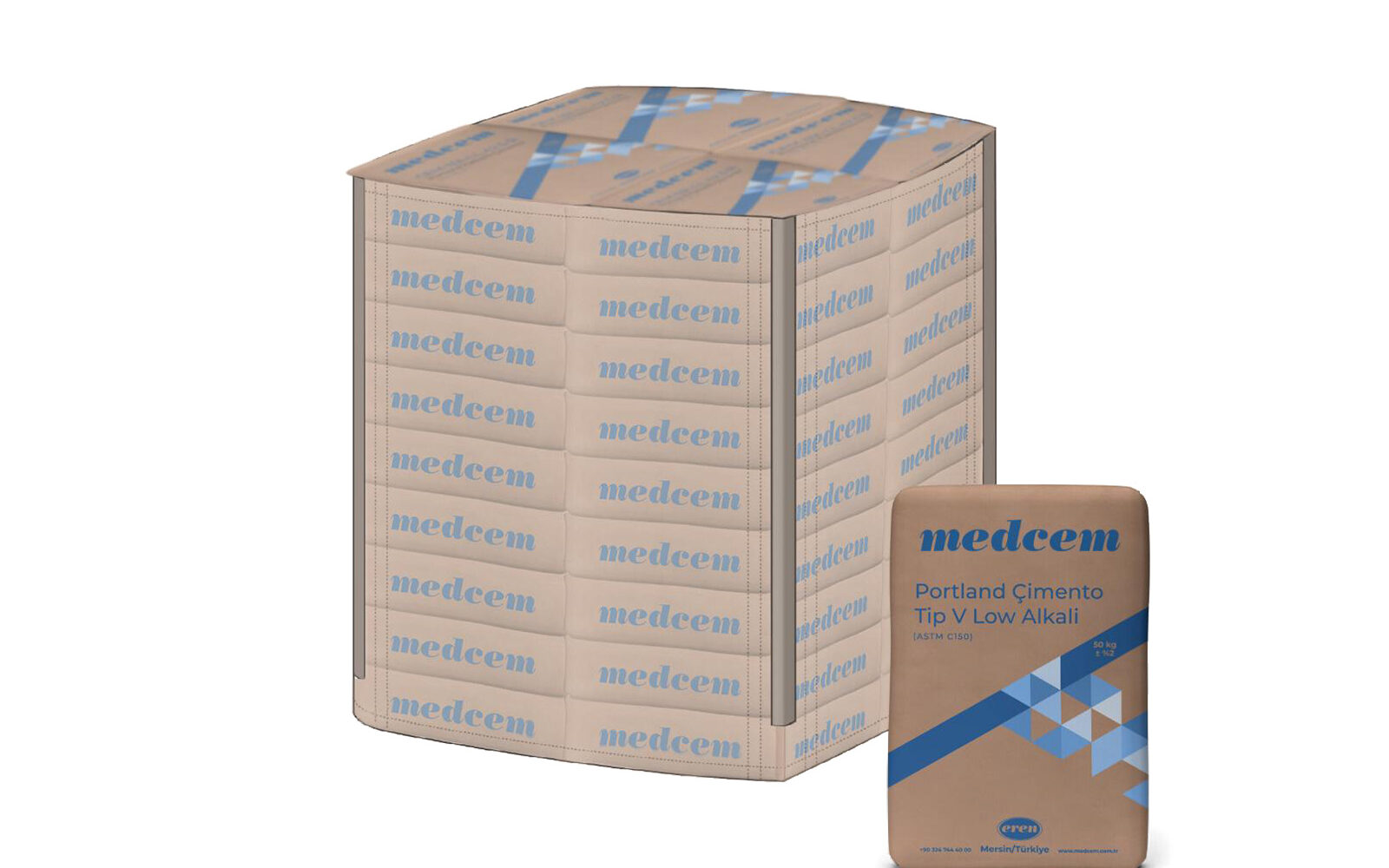
| Sales Method | Bags between 25-50 kg
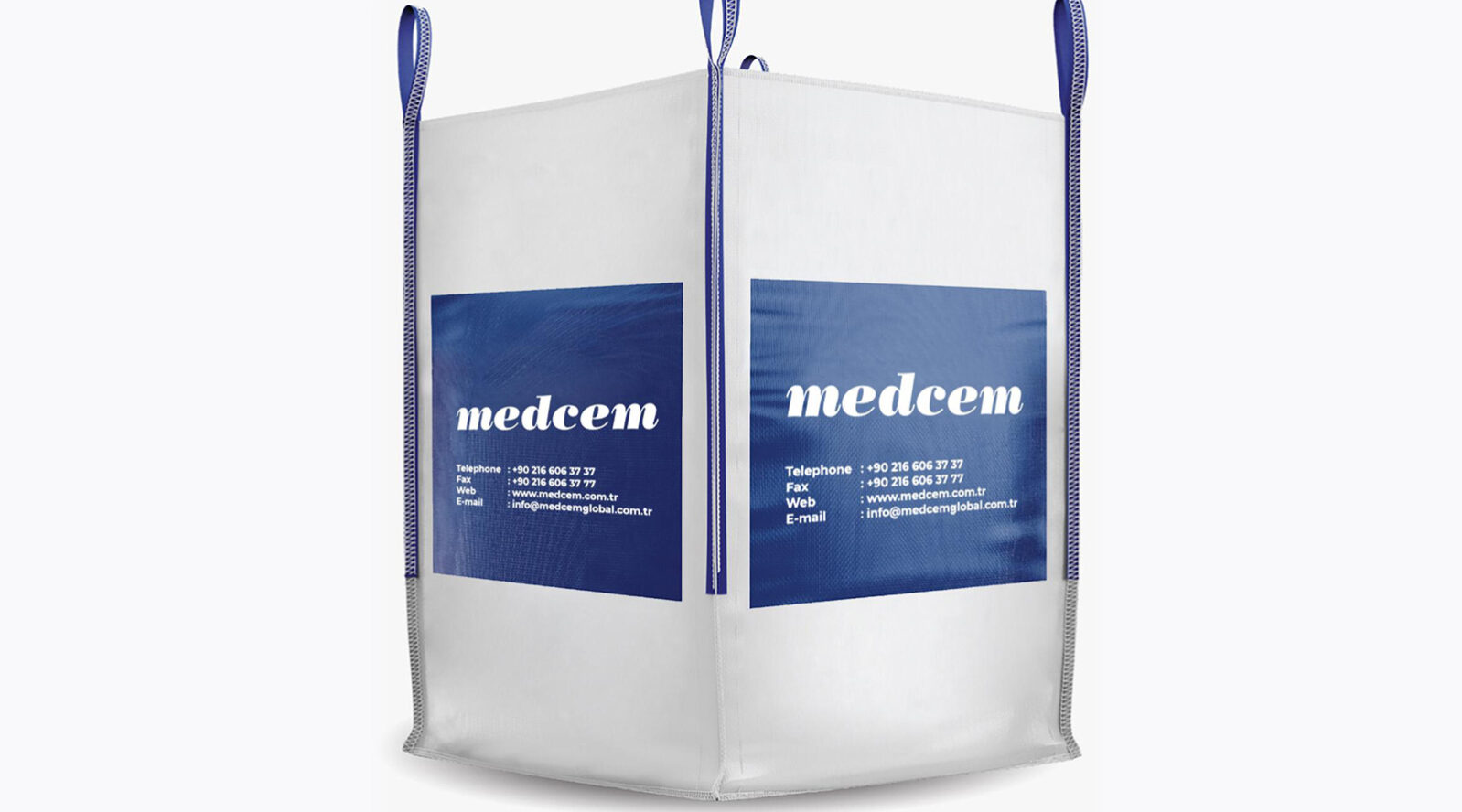
1.5 tons of slingbags Stretch hood with a capacity of 1.5-1.75-2 tons without pallet 1,5 ton bigbag Bulk *Can be supplied with a maximum of 2 ppm water-soluble chromium content in accordance with customer demand and legal regulations. |
| Conditions of Use | After pouring, appropriate curing and protection processes should be applied on the exposed surfaces of the concrete for at least 7 days.
Freshly poured concrete should be protected against the risk of freezing in cold weather. Concrete should be protected against cracking and thermal risks, as the loss of water in the concrete by evaporation will increase in hot weather and mass concrete casting applications. Due to the nature of the raw materials used in clinker production, slight color differences may occur. Our company is not responsible for problems arising from workmanship errors. |
| Storage | Contact of cement with air and moisture can cause hydration and change its properties. Therefore, in order to provide the recommended shelf life;
• Bulk cements should be stored in metal or reinforced concrete silos in a way that they will not come into contact with air and moisture. • Bag cements should be protected from humid environments. Bags should not be in direct contact with the ground, but should be stacked on pallets or timber. • It should be covered with a roof or cover so that it does not come into contact with direct sunlight. • Stacking instructions and shelf life under appropriate conditions are available on the bag. Environmental and Safety information can be found in the Safety data sheet |
| Chemical Requirements | Units of Measurement | Std. Limits | Test Results |
||
| SiO2 | % | 18,00-21,10 | |||
| Al2O3 | % | 3,50-5,15 | |||
| Fe2O3 | % | 3,70-5,90 | |||
| CaO | % | 61,20-65,40 | |||
| MgO | % | Max.6,0 | 1,00-3,70 | ||
| SO3 | % | Max.2,3 | 1,80-2,30 | ||
| Cl | % | 0,0010-0,0400 | |||
| Loss on Ignition (LOI) | % | Max. 3,5 | 1,10-3,30 | ||
| Insoluble Residue | % | Max. 1,50 | 0,10-1,10 | ||
| Free CaO | % | 0,25-3,00 | |||
| Na2O | % | 0,02-0,25 | |||
| K2O | % | 0,30-0,80 | |||
| Na2OEq. (Na2O + 0,658*K2O) | % | Max. 0,60 | 0,25-0,60 | ||
| Lime Saturation Factor (LSF) | – | 95,00-104,50 | |||
| Silica Modulus (SM) | – | 1,90-2,50 | |||
| Alumina Modulus (AM) | – | 0,65-1,40 | |||
| Tricalcium Aluminate (C3A) | % | Max.5,0 | 1,00-4,95 | ||
Physical and Mechanical Requirements |
Units of Measurement | Std. Limits | Test Results |
||
| Specific Gravity (ASTM C188) | gr/cm3 | 3,09-3,22 | |||
| Specific Surface (ASTM C204) | m2/kg | Min. 260 | 310-450 | ||
| Air Content (ASTM C185) | % | Max.12,0 | 4,0-11,9 | ||
| False Set (ASTM C451) | % | Min. 50 | 60-97 | ||
| Autoclave Expansion (ASTM C151) | % | Max.0,8 | 0,0-0,5 | ||
| Initial Setting Time (ASTM C191) | Minute | Min. 45 Max. 375 | 140-260 | ||
| Final Setting Time (ASTM C191) | Minute | 185-320 | |||
| Compressive Strength Method, ASTM C109/109M |
Units of Measurement | Std. Limits | Test Results |
||
| 3 day | psi | Min. 1160 | 2700-4100 | ||
| 7 day | psi | Min. 2180 | 3350-5100 | ||
| 28 day | psi | Min. 3050 | 4650-6650 | ||